
What is the nervous system?
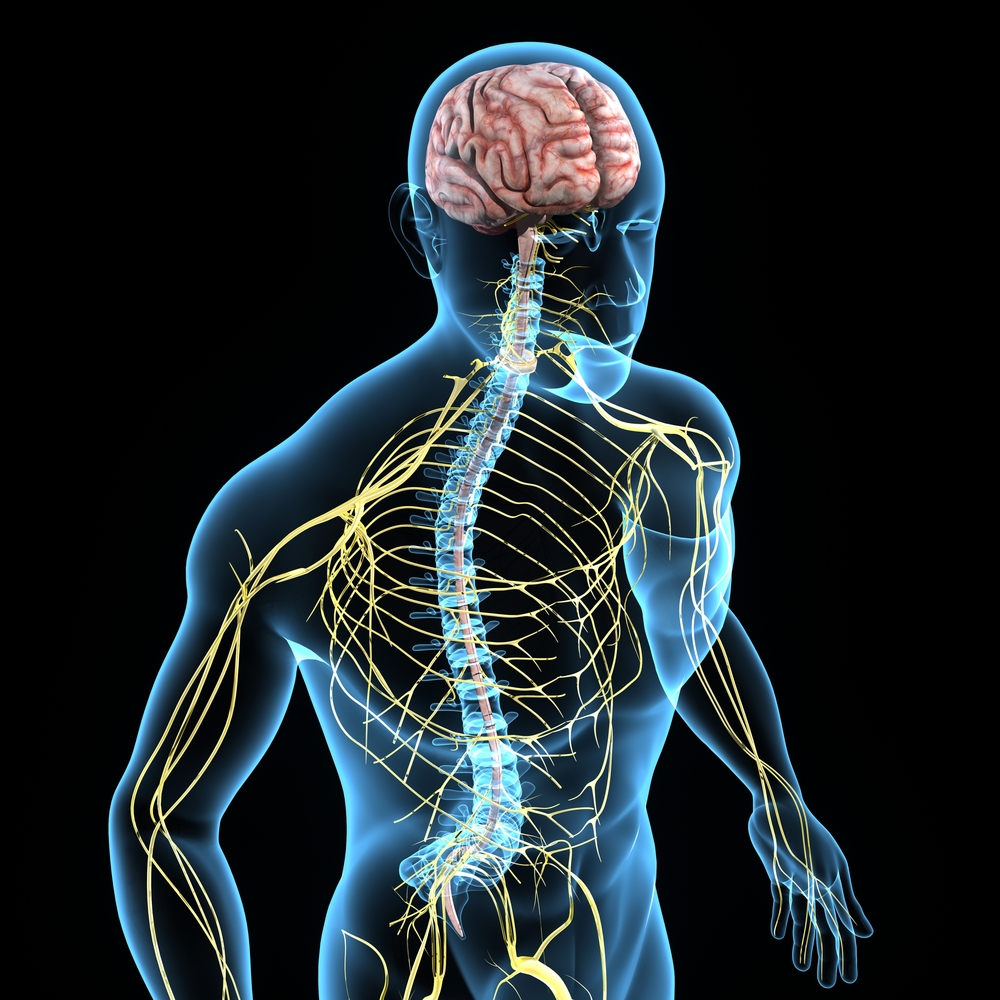
The nervous system is a complex collection of nerves and other nerve tissues that intertwine and interact with all the other 10 systems of the body. Even though it is found throughout the whole body, it equates to less than 5% of the total body mass, making it one of the smallest systems of the body. This is hard to get your head around when you consider there are billions of nerve cells (aka ‘neurons’) that make up the system. It’s mind-boggling stuff!
The nervous system is made up of two main parts:
- Central Nervous System (CNS)
- Peripheral Nervous System (PNS)
Central Nervous System
The CNS is made up of the brain and spinal cord. The brain is housed inside the skull and connects to the spinal cord through a hole in the base of the skull. The spinal cord runs down the centre of the body and is protected by the spinal column, which is made up of numerous vertebrae (the bones of the spine). The main roles of the CNS include:
- Processing incoming sensory information from inside and outside the body
- Sending out commands to the muscles to contract
- Sending out commands to glands to release hormones
- Acting as a control centre for emotions, thoughts and memories
Peripheral Nervous System
The PNS is made up of all the other nervous tissues that sit outside of the CNS. The nerves that travel from the brain (i.e. cranial nerves – of which there are 12 pairs) and spinal cord (i.e. spinal nerves – of which there are 31 pairs) to the rest of the body and back again make up a large part of the PNS. There are also various other types of nervous tissue that form this system.