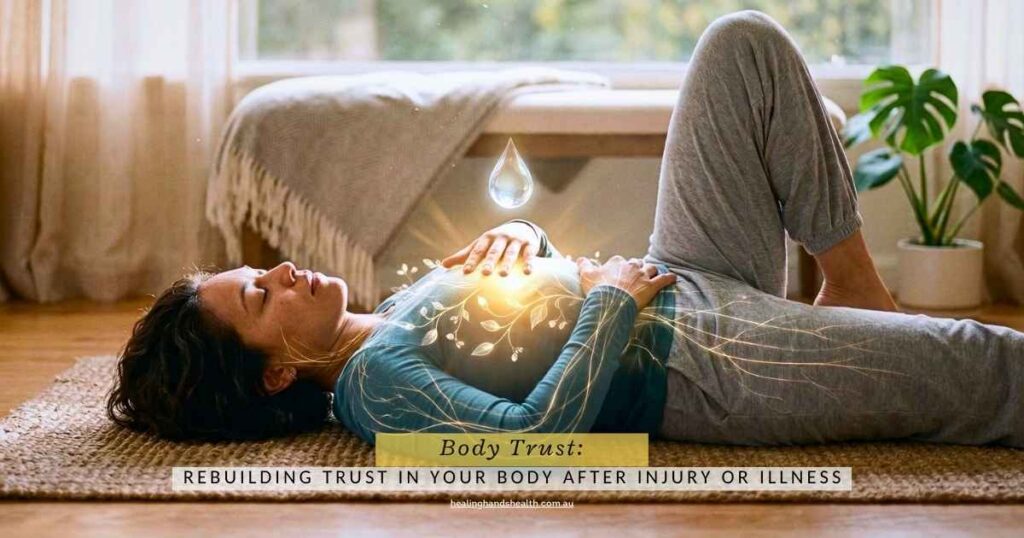
Body Trust: Learning to Feel Safe in Your Skin Again
A Gentle Guide to Rebuilding Trust With Your Body After Injury, Illness, or Trauma
After an injury, illness, or emotionally difficult experience, many people describe feeling disconnected from their body.
Something that once felt reliable now feels unpredictable. Movements that used to feel natural may suddenly feel cautious. Pain, fatigue, or fear can make it hard to trust what your body is telling you.
This experience is more common than many people realise. When the body has been through stress, injury, or trauma, it often shifts into protection mode. The nervous system becomes more alert, more guarded, and sometimes more sensitive to discomfort.
Healing, then, isn’t only about repairing tissue; it’s also about rebuilding trust.
What Does “Body Trust” Mean?
Body trust is the sense that your body is safe to live in.
It means feeling able to:
- Move without constant fear
- Listen to physical signals with curiosity rather than panic
- Recognise when to rest and when to engage
- Feel connected to your body rather than disconnected from it
When body trust is strong, the body feels like an ally rather than an obstacle.
After injury or illness, that trust sometimes needs time to rebuild.
Why Trust in the Body Can Be Lost
Loss of body trust can happen for many reasons.
For some people it begins with:
- A sudden injury
- Persistent pain
- A medical procedure or illness
- A period of intense stress
- Emotional trauma
When the body experiences these events, the nervous system may start associating certain movements, sensations, or environments with danger.
Even after physical healing begins, the nervous system may still remain cautious.
This is not weakness; it is the body trying to protect you.
How the Nervous System Influences Trust
Your nervous system is constantly assessing safety.
When it perceives threat, it responds by:
- Increasing muscle tension
- Heightening pain sensitivity
- Limiting movement
- Keeping the body alert
These protective responses are helpful in the short term, but they can persist longer than necessary.
Rebuilding body trust involves gently helping the nervous system learn that safety has returned.
Signs Body Trust Is Returning
Reconnection with the body often happens gradually.
You may notice small changes such as:
- Feeling less fearful of movement
- Recovering more quickly after flare-ups
- Becoming more aware of your body’s needs
- Feeling calmer during physical activity
- Experiencing more curiosity and less frustration about symptoms
These signs often appear before complete symptom resolution.
Healing is not just about eliminating discomfort; it is about restoring confidence in the body.
Practical Ways to Rebuild Body Trust
Body trust grows through small, consistent experiences of safety.
1. Move Gently and Consistently
Rather than avoiding movement, begin with gentle activities that feel manageable.
Walking, stretching, or guided mobility exercises help the body relearn safe movement.
2. Listen Without Judgement
If discomfort appears, try to approach it with curiosity rather than alarm.
Ask:
“What does my body need right now?”
This shift reduces fear and supports regulation.
3. Create Calm Moments During the Day
Slow breathing, quiet pauses, or time outdoors can help the nervous system reset.
These moments tell the body that not every experience is threatening.
4. Celebrate Small Progress
Progress may look subtle, moving more comfortably, sleeping better, or feeling less anxious about symptoms.
These changes are meaningful markers of healing.
How Osteopathy Supports Body Trust
Hands-on care can play a powerful role in restoring connection with the body.
Gentle osteopathic treatment helps:
- Reduce protective muscle tension
- Improve breathing and circulation
- Encourage comfortable movement
- Calm the nervous system
Equally important is the environment in which care takes place. Feeling heard, respected, and supported during treatment allows the body to relax.
When the nervous system senses safety, trust begins to rebuild.
Healing Is a Relationship With Your Body
Rebuilding body trust takes patience.
Some days may feel easier than others, and that’s normal. What matters most is the gradual shift from fear toward understanding.
Your body is not working against you. It is adapting, protecting, and learning.
Given the right support and environment, it can relearn safety.
Final Thoughts
Body trust is not something you force; it is something you rebuild.
Through gentle movement, nervous system regulation, and supportive care, your body can rediscover the sense of safety it needs to heal.
And with time, your body can once again feel like a place you trust.
Book Your Appointment
If you’re recovering from injury, illness, or a period of physical or emotional stress, our team is here to support your journey.
At Healing Hands Healthcare, we support recovery and reconnection with the body at our Kalkallo and Wollert clinics, offering gentle, patient-centred care.
Book an appointment today and let us help you rebuild trust in your body; gently and safely.