
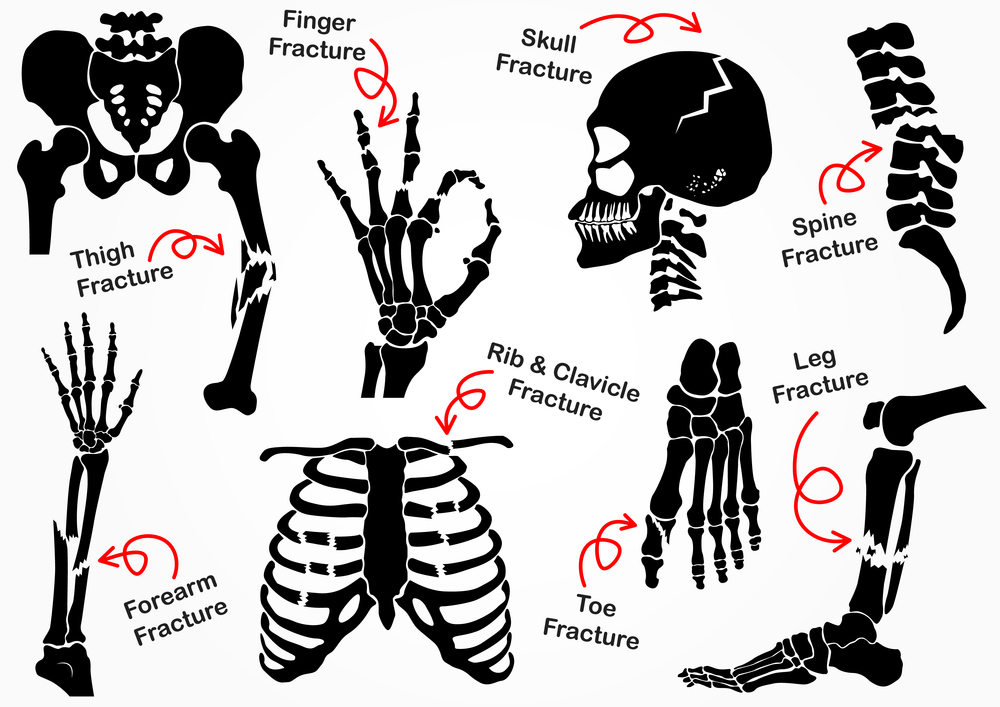
Sometimes it is obvious you have fractured a bone. If you have an accident or fall and look down and your immediate reaction is hmm… my leg or wrist is usually much straighter than that, then there is a good chance you have fractured a bone. Other times, it may not be so obvious. Take for example the stamp on the foot scenario above or taking an impact into the ribs or spine. These may not leave your body deformed, but it doesn’t mean a fracture hasn’t occurred. There are usually some tell-tale signs and symptoms that go alongside a traumatic event. Pain and not being able to use the body part as you normally would are big ones. There may also be evidence of bruising or swelling, although these do not always appear right away.
What is a fracture?
A fracture is a broken bone. Many people think fractured and broken bones are different, but they are not. As we move around this world in our own little human way, our bodies are subjected to forces acting upon them from the environment around us. Most of the time we don’t even notice these forces acting upon us as our bodies just soak them up as we go about our daily tasks. If the forces increase in strength (E.g. an angry opponent taking you out on the rugby field while you are running at top speed), we may then notice them. Ouch! If the force becomes too great for our bodies to handle, that’s when more serious injury occurs. For a muscle, tendon or ligament, a tear or rupture occurs. When bone is involved, it fractures. Bones can fracture in many ways, with some being more serious than others.
Types of fracture
There are many different types of bone fracture. Let’s get familiar with them, as the lingo can help you to understand what has happened: