
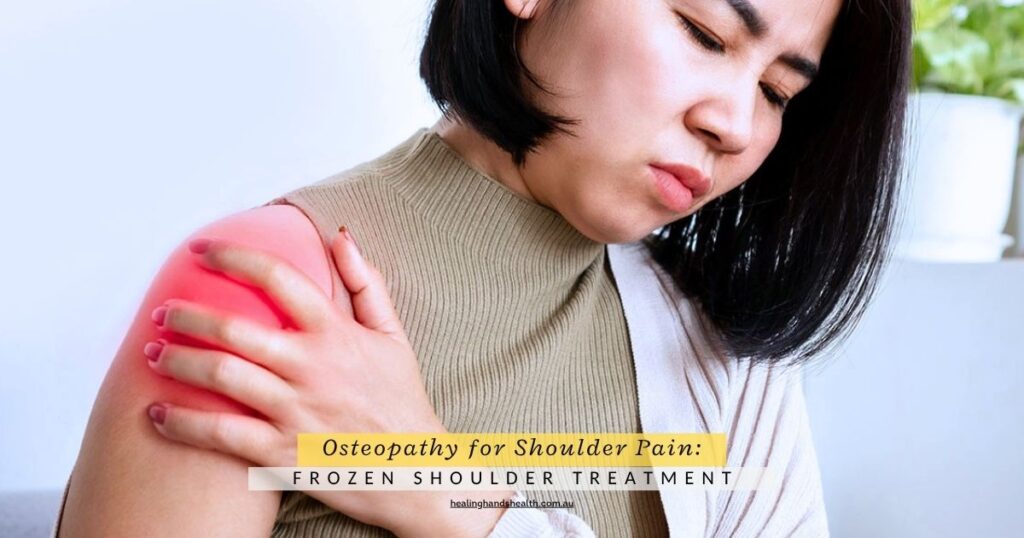
Shoulder Pain or Frozen Shoulder? Here’s How We Treat It Gently
Understanding Chronic Shoulder Pain, Limited Movement & Whole-Body Factors
Shoulder pain can start quietly.
A slight stiffness when reaching overhead.
A dull ache when sleeping on one side.
A gradual loss of movement that becomes harder to ignore.
For some people, this develops into what’s commonly known as frozen shoulder – where movement becomes significantly restricted and everyday tasks feel difficult.
It’s natural to want quick relief. But shoulder conditions often require a more thoughtful approach.
At Healing Hands Healthcare, we focus on understanding why the shoulder has become restricted and how to restore movement gently, safely, and sustainably.
What is Frozen Shoulder?
Frozen shoulder (also known as adhesive capsulitis) is a condition where the shoulder joint becomes stiff, painful, and limited in movement.
It typically develops in stages:
- Freezing stage: increasing pain and stiffness
- Frozen stage: reduced pain but significant restriction in movement
- Thawing stage: gradual return of mobility
This process can take months; sometimes longer and often feels frustrating.
However, with the right support, movement and function can improve.
Not All Shoulder Pain is Frozen Shoulder
Many people assume that any ongoing shoulder pain is frozen shoulder but this isn’t always the case.
Other causes of shoulder pain include:
- Muscle tension or strain
- Rotator cuff irritation
- Postural overload
- Repetitive use injuries
- Reduced upper back mobility
Understanding the exact cause is important, as it guides the right treatment approach.
Why Shoulder Pain Often Has Deeper Causes
The shoulder is one of the most mobile joints in the body and it relies on support from surrounding areas.
When these areas are not working well, the shoulder can become overloaded.
Common contributing factors include:
- Poor posture (especially rounded shoulders)
- Tight chest muscles
- Weak or underactive upper back muscles
- Limited movement in the thoracic spine
- Repetitive daily habits
- Stress-related muscle tension
The body compensates; and over time, pain or stiffness develops.
The Role of Movement Restriction
With shoulder pain, people often avoid movement to prevent discomfort.
While this is understandable, it can lead to:
- Increased stiffness
- Reduced joint mobility
- Muscle weakening
- Longer recovery time
Gentle, guided movement is essential for recovery; especially in frozen shoulder.
The key is progressive, comfortable movement, not force.
How Osteopathy Helps Shoulder Pain
Osteopathy uses a gentle, hands-on approach to restore movement and reduce discomfort.
Treatment may include:
- Soft tissue release to reduce muscle tension
- Joint mobilisation to improve range of motion
- Techniques to improve circulation
- Support for surrounding areas like the upper back and neck
- Guidance on safe movement and daily habits
This approach helps:
- Reduce pain
- Improve mobility
- Support natural healing
- Restore functional movement
Care is always tailored to your stage of recovery and comfort level.
Why a Whole-Body Approach Matters
Treating only the shoulder often isn’t enough.
At Healing Hands Healthcare, we assess:
- Posture and daily movement patterns
- Upper back and rib mobility
- Neck and shoulder coordination
- Breathing patterns
- Muscle balance across the body
By addressing these areas, we reduce the load on the shoulder and support long-term recovery.
Small Changes That Support Recovery
Alongside treatment, simple adjustments can make a significant difference.
These may include:
- Avoiding long periods in the same position
- Supporting your arm when resting or sleeping
- Gentle range-of-motion exercises
- Improving desk or workstation setup
- Gradually reintroducing daily activities
Consistency is more important than intensity.
When Should You Seek Help?
You may benefit from osteopathy if you experience:
- Persistent shoulder pain
- Difficulty lifting your arm
- Pain when reaching, dressing, or sleeping
- Stiffness that is not improving
- Gradual loss of movement
Early care can help prevent further restriction and support faster recovery.
Why Gentle Treatment Matters
Shoulder conditions can be sensitive.
Forceful or aggressive treatment can increase pain and resistance.
A gentle approach:
- Respects the body’s current limits
- Reduces protective muscle guarding
- Builds confidence in movement
- Supports nervous system relaxation
Healing happens best when the body feels safe.
Final Thoughts
Shoulder pain including frozen shoulder is often influenced by more than just the joint itself.
When treatment addresses the underlying patterns and supports gradual movement, recovery becomes more effective and sustainable.
With the right approach, your shoulder can regain comfort, mobility, and function.
Book Your Appointment
If you’re dealing with shoulder pain or restricted movement, we’re here to help with gentle, personalised care.
At Healing Hands Healthcare, we provide personalised osteopathy for shoulder pain and frozen shoulder at our Kalkallo and Wollert clinics, focusing on gentle, long-term recovery.
Book an appointment today and take the first step toward restoring comfortable, confident movement.