Sciatica: Understanding Nerve Pain and Natural Relief
How Osteopathy Helps Relieve Nerve Compression & Supports Long-Term Healing
Sciatica can feel sharp, frustrating, and difficult to ignore.
For some people, it begins as lower back discomfort. For others, it feels like pain shooting down the leg, tingling in the foot, or burning sensations that make sitting, walking, or sleeping uncomfortable.
Because sciatic pain often travels beyond the lower back, many people feel unsure about what’s really causing it.
At Healing Hands Healthcare, we take time to understand the full picture – not just where the pain is felt, but why the nerve is becoming irritated in the first place.
What Is Sciatica?
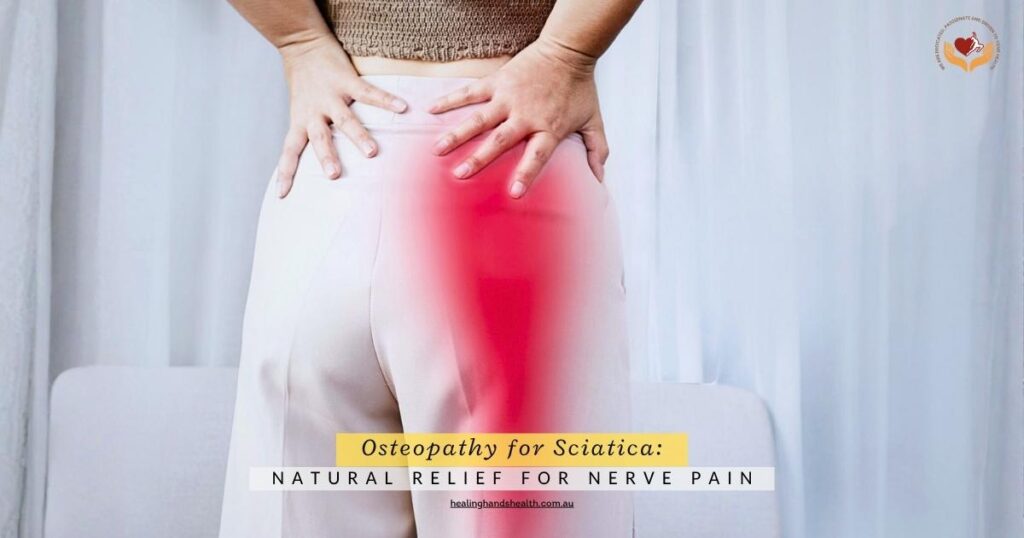
Sciatica refers to irritation or compression of the sciatic nerve, the largest nerve in the body.
The sciatic nerve begins in the lower back and travels through the hips, buttocks, and down each leg.
When this nerve becomes irritated or compressed, symptoms may include:
- Pain radiating down the leg
- Tingling or numbness
- Burning sensations
- Weakness in the leg or foot
- Lower back or buttock pain
Symptoms may range from mild discomfort to significant pain that affects everyday movement.
What Causes Sciatica?
Sciatica is not a condition itself – it is a symptom of pressure or irritation affecting the nerve.
Common contributing factors include:
- Disc irritation or bulging
- Tight muscles around the hips or pelvis
- Joint restriction in the lower back
- Poor posture or prolonged sitting
- Repetitive strain or lifting
- Reduced mobility through the hips and spine
In many cases, multiple factors combine over time.
Why Sciatica Often Feels Worse With Sitting
Long periods of sitting can place increased pressure on the lower back, hips, and surrounding tissues.
This may:
- Compress sensitive structures
- Tighten muscles around the pelvis
- Reduce circulation and mobility
People with sciatica often notice symptoms worsening:
- During long drives
- At a desk
- While getting up after sitting
Movement, when gentle and appropriate, is usually more beneficial than prolonged rest.
How Osteopathy Helps Sciatica
Osteopathy takes a whole-body, hands-on approach to relieving sciatic pain.
Rather than focusing only on the painful area, treatment looks at:
- Lower back mobility
- Pelvic alignment and movement
- Hip function
- Muscle tension patterns
- Posture and daily habits
Treatment may include:
- Soft tissue release to reduce tension
- Gentle joint mobilisation
- Stretching and mobility techniques
- Improving circulation and fluid movement
- Guidance on posture and movement habits
The goal is to:
- Reduce pressure around the nerve
- Improve movement
- Calm irritation
- Support natural healing
The Role of Muscle Tension and Compression
Tight muscles, especially around the hips and buttocks can contribute to sciatic symptoms.
For example, tension in the piriformis muscle (deep in the buttock region) may irritate the sciatic nerve in some people.
Stress and prolonged tension can also increase:
- Muscle guarding
- Pain sensitivity
- Nervous system irritation
This is why treatment often focuses on reducing overall tension; not just the nerve itself.
Why a Whole-Body Approach Matters
Sciatica rarely comes from one isolated issue.
The body compensates around areas of restriction or weakness. Over time, these compensations place extra strain on the lower back and pelvis.
At Healing Hands Healthcare, we assess:
- Walking and movement patterns
- Hip and spinal mobility
- Breathing mechanics
- Postural habits
- Lifestyle and workload factors
Addressing these contributing patterns helps support longer-term relief.
Movement Is Important for Recovery
Many people become fearful of movement when nerve pain is involved.
While certain movements may aggravate symptoms temporarily, avoiding movement completely can increase stiffness and slow recovery.
Gentle movement helps:
- Improve circulation
- Reduce tension
- Restore mobility
- Support nerve health
Recovery often begins with small, manageable movements rather than aggressive exercise.
When Should You Seek Help?
You may benefit from osteopathy if you experience:
- Pain radiating down the leg
- Tingling or numbness
- Persistent lower back and buttock pain
- Symptoms aggravated by sitting
- Reduced movement or mobility
Early care can help reduce ongoing irritation and prevent symptoms from becoming more persistent.
Why Natural, Long-Term Relief Matters
Temporary pain relief may help in the short term; but lasting recovery often requires addressing the underlying patterns contributing to nerve irritation.
A sustainable approach includes:
- Hands-on care
- Movement support
- Lifestyle adjustments
- Nervous system regulation
- Ongoing guidance when needed
The aim is not only to reduce symptoms, but to help the body move and function more comfortably long term.
Final Thoughts
Sciatica can feel overwhelming, but with the right support, recovery is possible.
When treatment focuses on reducing compression, improving movement, and supporting the body as a whole, healing becomes more sustainable.
Your body is capable of healing; sometimes it simply needs the right conditions and support.
Book Your Appointment
If you’re experiencing sciatic pain, tingling, or lower back discomfort, our team is here to support you with gentle, personalised care.
At Healing Hands Healthcare, we provide personalised osteopathy for sciatica at our Kalkallo and Wollert clinics, focusing on gentle, long-term nerve pain relief.
Book an appointment today and take the first step toward natural, long-term relief.