Postural Strain in Office Workers: Undoing the Desk Job Damage
How Osteopathy Helps Relieve Neck Pain, Mid-Back Stiffness, Hip Tightness & Stress From Long Hours at a Desk
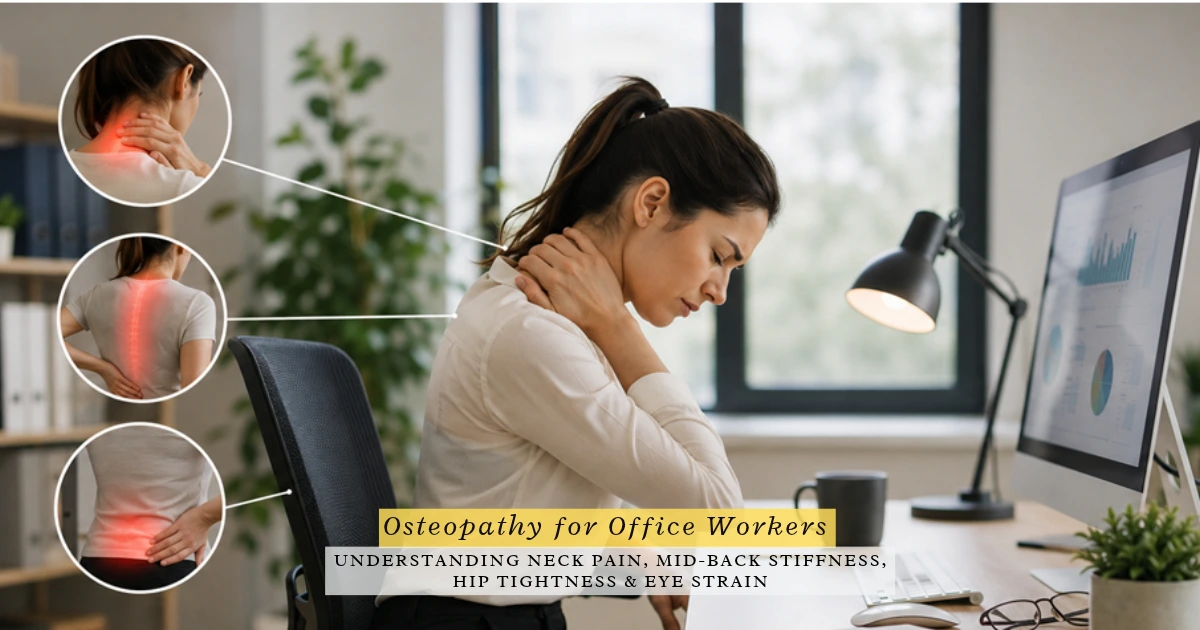
For many people, the modern workday involves hours spent sitting at a desk, looking at a computer screen, and moving very little between meetings and deadlines.
While office work may not seem physically demanding, the body often tells a different story.
A stiff neck at the end of the day. Tight shoulders during meetings. Mid-back discomfort after hours of sitting. Aching hips when standing up. Tired eyes and persistent headaches that seem to have become “normal.”
At Healing Hands Healthcare, we regularly support office workers experiencing these everyday aches and pains. The good news is that much of this discomfort isn’t simply something you have to live with.
By understanding how prolonged sitting affects the body, we can help restore movement, reduce tension, and prevent these patterns from becoming long-term problems.
Why Desk Jobs Affect the Whole Body
Our bodies are designed for movement.
When we remain in one position for long periods, muscles and joints begin to adapt to that position.
Over time, prolonged sitting may contribute to:
- Neck stiffness
- Tight shoulders
- Mid-back discomfort
- Lower back pain
- Hip tightness
- Reduced flexibility
- Increased muscle fatigue
It’s not simply sitting that’s the problem – it’s staying in the same position for too long.
Even a well-designed workstation cannot replace regular movement.
Neck and Shoulder Tension
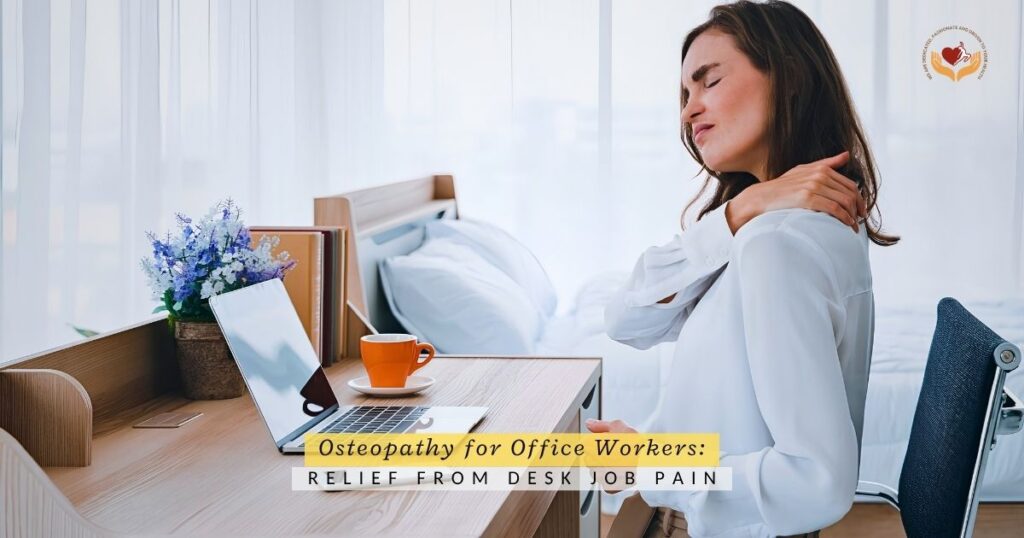
One of the most common complaints among office workers is tension through the neck and shoulders.
This often develops from:
- Looking down at laptops
- Multiple computer monitors
- Long video meetings
- Holding the head forward
- Stress during busy workdays
As the head moves forward, the muscles supporting the neck work harder.
Over time, this can lead to:
- Neck pain
- Tension headaches
- Shoulder tightness
- Reduced range of motion
The Forgotten Mid-Back
The thoracic spine, or mid-back, plays an essential role in posture and movement.
Long periods of sitting can reduce movement through this area, leading to:
- Stiffness between the shoulder blades
- Rounded shoulders
- Difficulty taking deep breaths
- Increased strain on the neck
When the mid-back becomes less mobile, the neck and lower back often compensate.
Supporting thoracic mobility is an important part of lasting recovery.
Why Sitting Creates Hip Tightness
Sitting places the hips in a constantly flexed position.
After many hours at a desk, the muscles at the front of the hips may become tight, while others become weaker through reduced use.
This may contribute to:
- Hip stiffness
- Lower back discomfort
- Reduced walking comfort
- Difficulty standing after prolonged sitting
Gentle movement throughout the day helps maintain healthy mobility.
Eye Strain and Headaches
Digital screens place constant demands on the eyes.
When we concentrate for long periods, we naturally blink less and often lean closer to the screen.
This may contribute to:
- Eye fatigue
- Headaches
- Facial tension
- Neck strain
Simple habits like regular screen breaks and adjusting monitor height can make a significant difference.
How Stress Shows Up Physically
Office work doesn’t only challenge the body – it also challenges the nervous system.
Deadlines, meetings, workload, and constant notifications can keep the body in a state of ongoing alertness.
Common physical responses include:
- Tight shoulders
- Jaw clenching
- Shallow breathing
- Muscle guarding
- Increased headache frequency
Stress is not just emotional – it has very real physical effects.
How Osteopathy Helps Office Workers
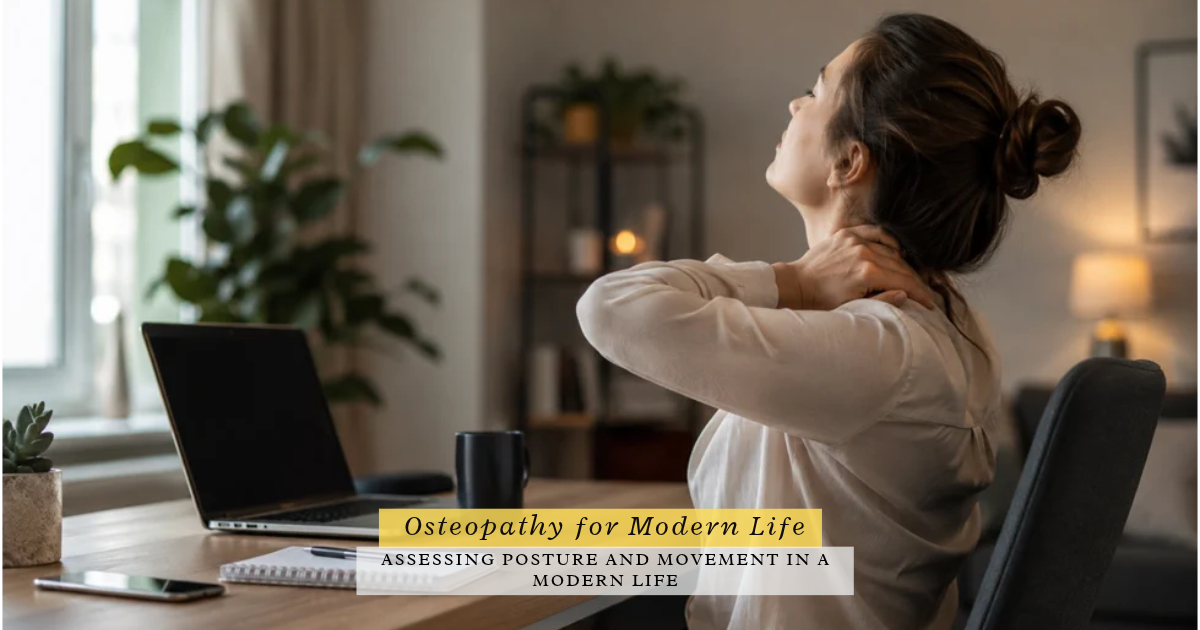
At Healing Hands Healthcare, we take a whole-body approach to treating desk-related discomfort.
We assess:
- Sitting posture
- Spinal mobility
- Hip movement
- Neck function
- Breathing patterns
- Everyday work habits
Treatment may include:
- Gentle joint mobilisation
- Soft tissue release
- Improving thoracic mobility
- Reducing muscle tension
- Breathing support
- Practical ergonomic advice
Our goal is not only to relieve discomfort but to help prevent it from returning.
Small Changes That Make a Big Difference
You don’t need to redesign your entire workday to support your body.
Simple habits can have a lasting impact:
- Stand up every 30 – 60 minutes
- Change your sitting position regularly
- Stretch your neck and shoulders throughout the day
- Position your monitor at eye level
- Take short walking breaks
- Practise slow, diaphragmatic breathing during busy periods
Consistency is more important than perfection.
When Should You Seek Help?
You may benefit from osteopathic care if you experience:
- Neck pain after computer work
- Frequent headaches
- Mid-back stiffness
- Hip tightness after sitting
- Persistent shoulder tension
- Discomfort that returns despite stretching
Addressing these issues early often prevents them from becoming chronic.
Final Thoughts
Desk jobs don’t have to mean living with daily pain and stiffness.
By improving movement, supporting posture, reducing nervous system tension, and addressing the whole body, it’s possible to work more comfortably and move with greater ease.
Your body was designed to move – and with the right support, it can feel better again.
Book Your Appointment
If long hours at your desk are leaving you with neck pain, back stiffness, headaches, or hip tightness, we’re here to help.
At Healing Hands Healthcare, we help office workers at our Kalkallo and Wollert clinics overcome desk – related pain with personalised osteopathic care focused on posture, movement, and long-term wellbeing.
Book an appointment today and discover how personalised osteopathic care can help you feel more comfortable at work and beyond.