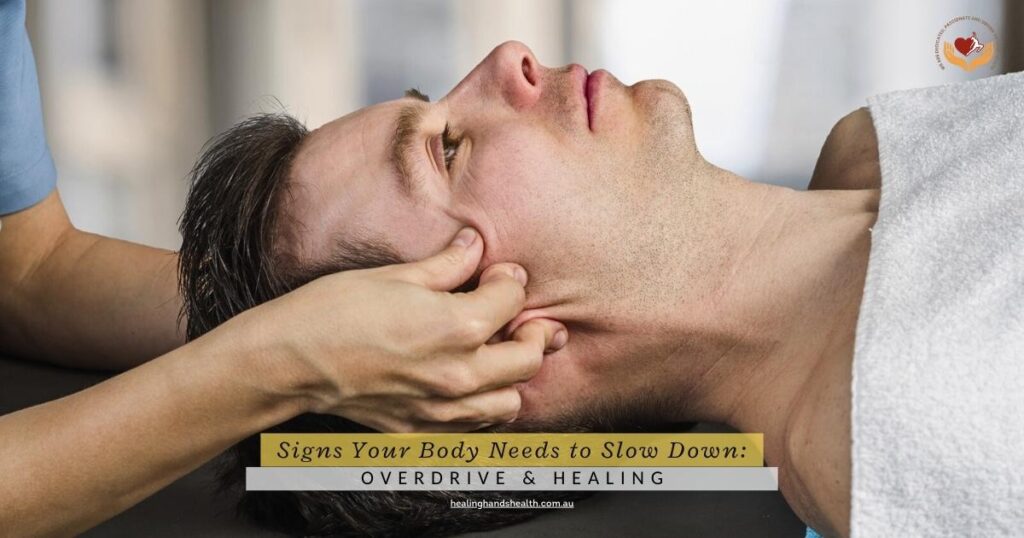
Is It Time to Slow Down? What the Body Tells You When You’re Doing Too Much
Recognising the Signals of Overdrive & How Slowing Down Supports Healing
We live in a culture that rewards doing more.
More productivity.
More responsibility.
More achievement.
More endurance.
But the body doesn’t measure success the same way the world does. When the pace becomes unsustainable, it begins to send signals; sometimes subtle, sometimes loud.
At our clinic, we often meet people who say, “I just need to push through this busy period.” Yet their body is already asking for something different.
This blog explores the quiet and obvious signs of overdrive and why slowing down is not weakness, but wisdom.
The Body Has an Early Warning System
Before burnout or injury appears, the body whispers.
Early signs of overdoing it may include:
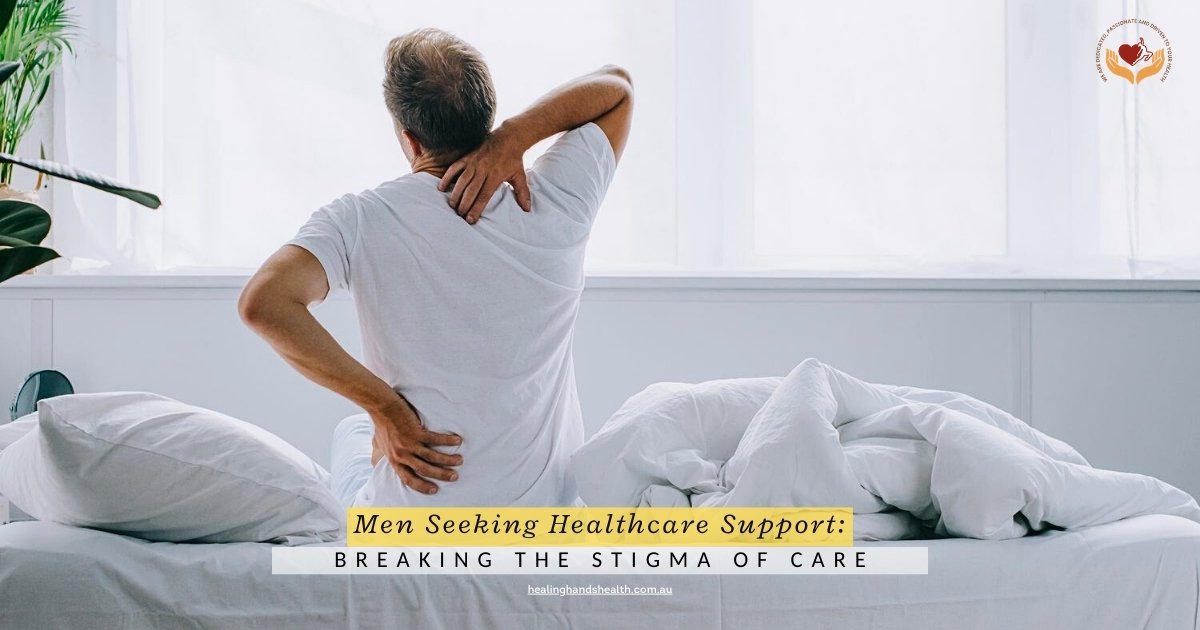
- Subtle neck or shoulder tension
- Jaw clenching
- Restless sleep
- Irritability
- Digestive changes
- Frequent sighing
- Feeling “wired but tired”
These signs are easy to ignore because they feel manageable. But they are messages from your nervous system saying:
“I need rest. I need space. I need safety.”
When these whispers are dismissed, the body speaks louder.
When the Body Speaks Louder
If the early signals go unaddressed, symptoms often intensify:
- Persistent headaches
- Lower back pain
- Fatigue that sleep doesn’t fix
- Anxiety or racing thoughts
- Hormonal irregularities
- Frequent illness
- Emotional overwhelm
This isn’t the body failing; it’s the body protecting.
The nervous system moves into survival mode when it perceives ongoing pressure. Muscles tighten, breathing becomes shallow, digestion slows, and healing processes are deprioritised.
The body shifts from repair to defence.
Why Slowing Down Feels So Difficult
For many people, slowing down feels uncomfortable.
You may notice:
- Guilt when resting
- Fear of falling behind
- Anxiety in stillness
- A strong urge to stay busy
This happens because a body used to constant stimulation can mistake calm for unfamiliar territory.
Slowing down is not just behavioural; it’s neurological. The nervous system needs time and consistency to relearn safety.
How Overdrive Affects Healing
When the body remains in overdrive:
- Pain sensitivity increases
- Recovery from injury slows
- Sleep becomes lighter and less restorative
- Hormonal balance shifts
- Emotional regulation becomes harder
Even the most effective treatments have limited impact if the body doesn’t feel safe enough to heal.
Slowing down creates the internal conditions that allow recovery.
What Slowing Down Actually Means
Slowing down doesn’t require dramatic life changes. It starts with small, consistent shifts.
It can look like:
- Taking 5-10 minute pauses during the day
- Eating without multitasking
- Going for a gentle walk instead of intense exercise
- Turning screens off earlier
- Saying “not today” to non-essential demands
- Breathing slowly before reacting
These small signals tell the nervous system:
“We are safe. We can soften.”
Healing begins in that softness.
Listening to the Body Instead of Fighting It
Many people see symptoms as obstacles to overcome. But often, symptoms are guides.
Instead of asking:
- “How do I get rid of this?”
Try asking:
- “What is my body asking for?”
Pain, tension, fatigue, and irritability are not enemies. They are information.
When the body feels heard, it often responds with relief.
How We Support Nervous System Recovery
At Healing Hands Healthcare, we look beyond symptoms to the patterns underneath.
Our approach considers:
- Breathing mechanics
- Diaphragm mobility
- Muscle guarding and tension patterns
- Stress load
- Sleep and recovery habits
- Emotional pressure
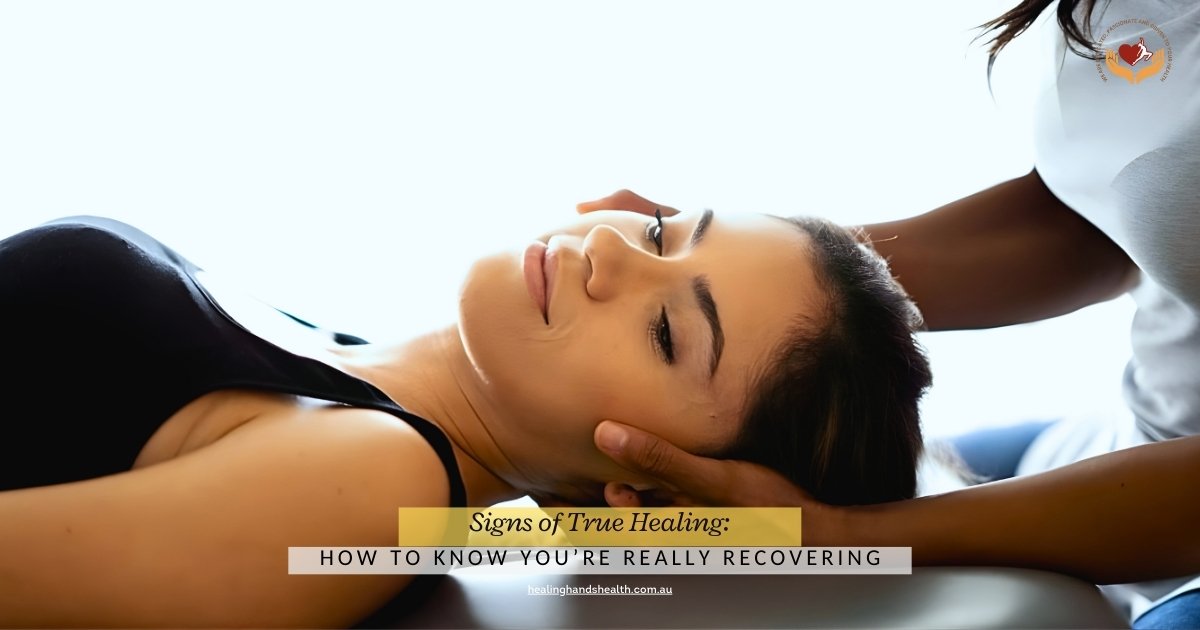
Through gentle osteopathy, physiotherapy, soft tissue techniques, and nervous system awareness, we help bring the body out of overdrive and back into regulation.
We don’t force change.
We create the conditions where change becomes possible.
The Strength in Slowing Down
Slowing down is not quitting.
It is recalibrating.
It allows:
- Energy to stabilise
- Emotions to regulate
- Pain to reduce
- Clarity to return
- Healing to unfold
Sometimes, the most productive thing you can do is pause.
Final Thoughts
If your body has been whispering; listen.
If it’s been speaking loudly; respond.
You don’t need to earn rest.
You don’t need to collapse before slowing down.
Healing happens when the body feels safe enough to stop bracing.
Book Your Appointment
If stress, fatigue, or persistent tension are signs your body may be in overdrive, we’re here to support you gently and respectfully.
At Healing Hands Healthcare, we help patients restore balance at our Kalkallo and Wollert clinics, offering gentle care to calm the nervous system and support recovery.
Book an appointment today and let your healing begin at a pace that truly supports you.